Monday, July 25, 2011

Great Britain Tour - Part 3

Day 8: Loch Lomond, Scotland and Carlisle, England

We awoke to a rather damp start on Wednesday, with low fog over the loch outside our spaceship. We decided to get going quickly, so we immediately made tracks for Luss, a quaint village on the shores of Loch Lomond, where we could refresh ourselves and find some breakfast.

We thought Luss was gorgeous, full of stone cottages with well tendered gardens, the kind which undoubtedly cause their elderly female owners to puff up with pride. We strolled about the lovely village and the lakefront, then found a tea room for the quintessential British refreshment - tea and scones. Well, Megan did anyway, Tim went for a more American hot chocolate and chocolate fudge cake.

After that, more walking was required, so we rounded Loch Lomond a bit further to Balloch where we stomped around the ruined castle and admired the view across the loch. Then it was time to point the spaceship southwards - the dreary Scottish weather was showing no signs of improving, but surely England would be brighter, right?

We crossed the border into England and drove to a city called Carlisle. Not only was the rain pouring down in Carlisle when we arrived, but the traffic was at a standstill. It seems 3pm on a Wednesday is rush hour! We are constantly amazed with the amount of people in the UK who appear to have nothing to do during weekdays other than prowl centre cities.

Anyway, Megan took on the Tuille Museum for an hour or so to learn about Carlisle's history as a Roman border town, while Tim walked the city streets and sought photo opportunities. We then headed to what turned out to be a very nice campsite just south of Carlisle on a very cold night - we managed to cook and eat our nachos that night in under 10 minutes!

Day 9: Lakes District, England

On Thursday, we embarked on the famous Lakes District of England's north-west and our first port of call was the highly anticipated Cockermouth (great name) to see the house where poet William Wordsworth spent his early years.

Cockermouth is a pretty little town where the Derwent and Cocker rivers meet - which makes for lovely views, but which also sadly leaves the town prone to severe flooding. The Wordsworth House itself was quite impressive (Wordsworth's father was a land agent to a wealthy man, who let him the house rent free), but what we really appreciated was the skill and care that had gone into reproducing the furnishings and set up the house as it would have been in the 1770s, right down to food on the table being served up by costumed maids! We tried a piece of ginerbread, baked from an 18th century recipe. Some of the rooms were "hands on", so we could play with the old fashioned toys in the children's bedroom (one bed for five children!) and write with a quill in the office. Great times.

However, the real adventure of the day was still to come. We left Cockermouth and drove south-east to a lovely place called Windermere, via the pretty village of Pooley Bridge on a lake front, where we swapped our DVDs at a "space station" (one of many spaceship offices scattered throughout Europe). As it had been in Scotland, the scenery around the Lakes District was magnificent - not only the beautiful lakes and mountains, but lovely green farmland and stone walls with old-fashioned wooden gates too.

Windermere is perhaps best known as the place where the author Beatrix Potter lived and wrote her 23 famous stories about animals. After lunch and a look through the town, we headed to The World of Beatrix Potter. The popular tourist attraction brings to life many of the characters Beatrix Potter created and provides some background about Potter herself - she lived on a farm just out of Windermere and created her animal characters from many of her own pets and farm animals or those of her friends on nearby farms.

Our tour began with a short film and then we walked through interactive displays of the characters before arriving at a specially created "Mr MacGregor's Garden". The garden was designed and created by a former Chelsea Flower Show winner, who had carried out years of research to try to re-create the garden as closely as possible to how it was described in the story Peter Rabbit and also to keep as close as possible to the types of vegetables and plants that would have been grown in the area in the early 1900s when Potter wrote the story. We both loved the visit - definitely not just for kids and well worth a look!

We ended the day in the Lakes District by walking along the lake just outside of Windermere. It was a lovely, peaceful walk, although Tim got eaten by sandflies - grrr. We drove on to a market town called Kendal. After navigating a way too complicated one way system, we found a park where we dropped anchor on the spaceship for the night and we had a delicious (and very cheap) curry dinner and a drinks at a Wetherspoons pub.

Day 10: Liverpool, England

We woke early and hit the road straight away, leaving Kendal and finding a Services bay not far from there where had breakfast and freshened up, before carrying on down the road towards Liverpool!

Liverpool was founded as a borough in 1207 and was granted city status in 1880. It is a city of around half a million people, although the wider urban area is home to almost 1 million people. The city sits on the eastern side of the Mersey Estuary. Liverpool's status as a port city has contributed to its diverse population and it is particularly well known for its music and culture - especially The Beatles!

As soon as we parked the spaceship and started wandering through the city, we were struck by the real buzz of the place. More than anywhere else on our tour of Great Britain thus far, the place felt alive and exciting. It was also a stunning sunny day, which helped! We walked down to the port area, past the famous Royal Liver Building - one of England's most famous buildings - with the two mythical Liver birds sitting proudly atop, seaweed hanging from their beaks. The port has undergone a massive regeneration in recent years and now boasts the beautiful Albert Dock, packed with museums, shops and eateries.

After checking out Albert Dock, we walked back towards the city centre and got some lunch in the massive pedestrianised shopping district and then we returned to Albert Dock to visit some of the fine museums. The Pier master's House on the waterfront showed what life was like in the region during the tough World War II years. We also visited Tate Liverpool (modern art gallery), where we saw some great exhibitions, including one that showed normal everyday items like household furniture, but in giant size. That was pretty cool.

Then it was time to join our Beatles Magical Mystery bus tour. The two hour bus ride through Liverpool's suburbs and city centre was brilliant. We had an excellent guide who gave us loads of information about the band members' early years, growing up on Merseyside and how they eventually formed the band that took the world by storm. We saw each of the boys' childhood homes, the schools they attended, the church hall where John and Paul first met and we got to stop on Penny Lane, outside Strawberry Fields and a number of other locations that were important in shaping the Beatles phenomenon.

The tour ended right in the heart of the city, near the famous Cavern Club, the underground bar where the Beatles played a staggering 292 times in their early years, where they started to make a name for themselves in Liverpool. We had a drink in the Cavern Club and listened to a John and Paul tribute band - two brothers called "The Two of Us" - who were really good.

Then we wandered down Mathews Street and around the Cavern area, getting some photos with other Beatles sites, such as the John Lennon statue, the Cavern Club's Wall of Fame (showing the hundreds of famous bands and performers who have played at the club over the years), the Eleanor Rigby statue and the White Star pub, where the Beatles regularly hung out!

In the evening we found a camping ground outside of Liverpool, where we stayed the night. It was a lovely warm evening, so we had dinner outside on the grass then we ended a superb day in Liverpool watching a DVD in the spaceship.

Day 11: Liverpool, England

We woke early on Saturday and left the camping ground to head back into Liverpool. It was going to be a day of exploring Liverpool's stunning museums. After a brief stint at an internet cafe, we set off for Albert Dock and we went our separate ways - Tim to the Beatles' Story museum and Megan to the Liverpool Maritime Museum.

The Beatles' Story museum is spread over two locations. At the first location Tim saw an awesome "4-D" Beatles video experience, a black and white photo exhibition of the band's early years and the White Feather tribute to John Lennon, as told by John's first wife Cynthia and son Julian. Meanwhile, Megan was discovering exhibitions on famous ships, such as the Titanic and the Lusitania, both of which had links to Liverpool, and also on international slave trade conducted from the Mersey ports.

We met for lunch in the city and then we carried on our museum extravaganza - Tim visited the second location of the Beatles' Story museum in Albert Dock, which followed the Beatles from the early days, the forming of the band, the Cavern Club days, their rise to worldwide fame, the crazy years of Yellow Submarine and Sgt Pepper and the eventual break-up of the band. It then followed each band member since the break-up, showing what they had done since, in terms of individual music and other interests. It was a really thorough and well put together story.

Megan returned to the Maritime museum and then carried on to the brand new Liverpool Museum, which included exhibits on daily life in Liverpool throughout history and on popular culture, including sport (such as the mighty, mighty Reds Liverpool FC football team - just for you Mr Colin), music, TV and culture in the region. Later in the afternoon, we wandered through the busy city streets and then boarded the spaceship and headed for...north Wales.


Luss


Tim in
Luss


Megs at
Words-
worth
House


Megs in
Lakes
District


World of
Beatrix
Potter


Ditto


Megs in Mr
MacGregor's
Garden!


Royal Liver
Building


Megs on
Mersey-
side


Tim in
Tate
Liverpool


Magical
Mystery
Bus
Tour


Penny
Lane!


Straw-
berry
Fields
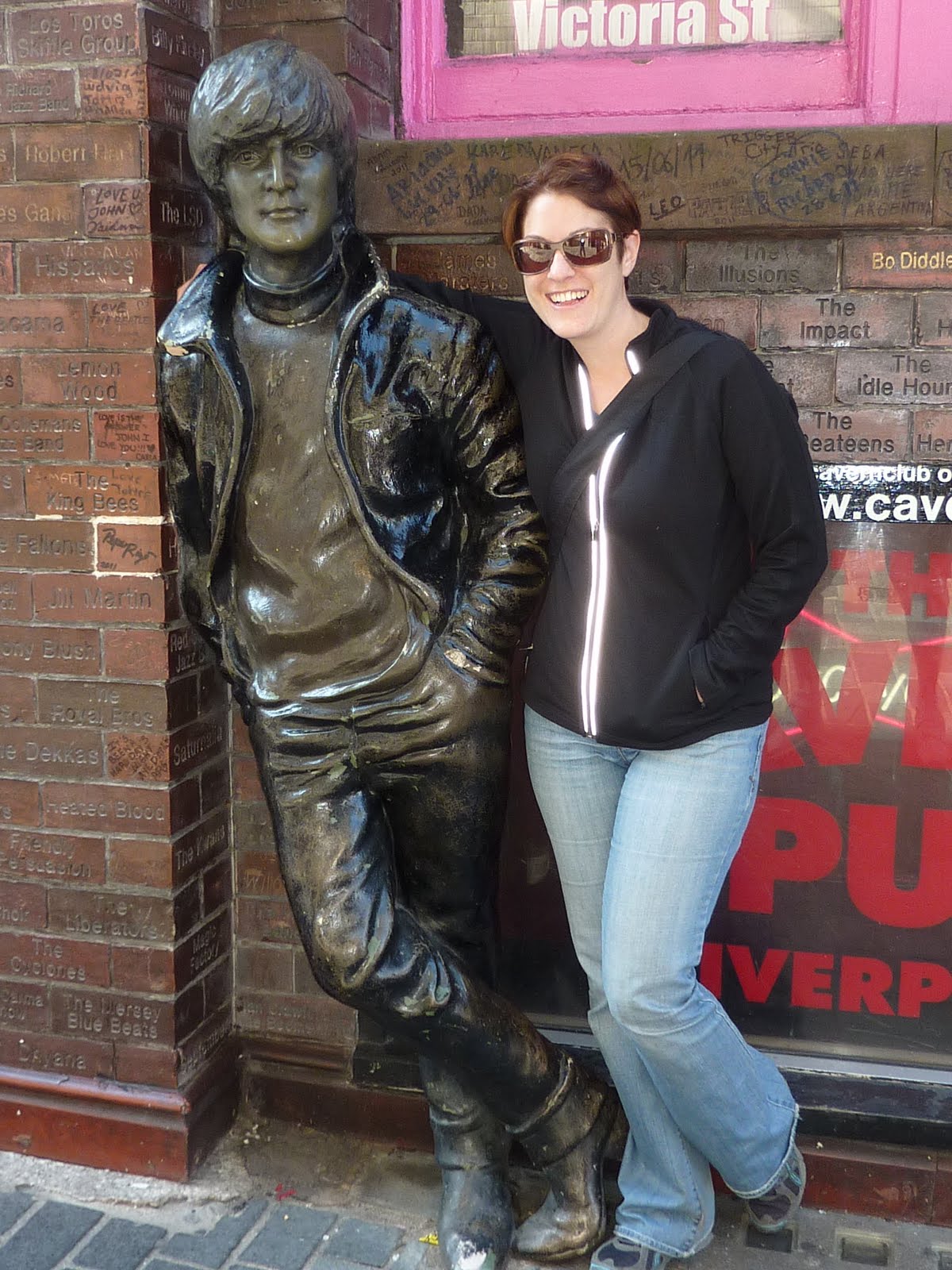


John Lennon
and Megs


Cavern
Club


Lunch
with
Eleanor
Rigby


Tribute
to John
Lennon


Wednesday, July 20, 2011

Great Britain Tour - Part 2

Day 4: Newcastle and Hadrian's Wall, England

Sadly our run of good weather came to a horrible end on Saturday. We woke to a wet and grey morning in the pub car park in Chester-le-Street. We re-jigged our plans for seeing Hadrian's Wall in the morning and instead we decided to head straight to Newcastle, hoping the weather would clear later in the day for some Wall action.

We got some breakfast and coffee in Chester-le-Street and we arrived in Newcastle around 9.30am, having seen one of England's iconic images, the "Angel of the North" statue, on our way into the city. We parked the car and took jackets and umbrellas as we explored the city centre of Newcastle.

Newcastle-upon-Tyne owes its name to its Norman castle which was founded in 1080 by the eldest son of William the Conqueror. The Romans had bridged the River Tyne and built a fort on the site 1,000 years earlier. During the Middle Ages it was used as a base for English campaigns against the Scots. Later, the city flourished as a coal mining and exporting centre and was later known for engineering, steel production and as the world's foremost shipyard. Recently the city's industrial base has declined, but Newcastle now has a very modern city centre, fantastic cultural treasures and the Newcastle United football team to boast about.

As it was wet, we decided it was a good opportunity to do some blogging and catching up on what was happening in the world, so we found and internet cafe and sheltered from the rain for a while. We tried to stick to indoor activities, so we checked out the massive Eldon Square shopping mall, which was really impressive. We had some McDonald's for lunch, along with the rest of the population of Newcastle - prams, walking frames and all - you couldn't move in there! After lunch, we walked along the banks of the River Tyne, checking out the beautiful Tyne Bridge and Millennium Bridge and we crossed the river to visit the Baltic - a contemporary art gallery.

There was some really interesting art in the Baltic and we got a magnificent view over the river and the city centre of Newcastle from the 5th floor viewing platform. We were also sheltered from the rain, so we both thoroughly enjoyed our visit. When we emerged from the Baltic, the skies were a little clearer, which meant that we could at least walk through the city, which is very charming. However, another deluge soon followed, so we boarded the spaceship and left Newcastle behind.

We drove west past a little town called Hexham, where we would spend the night at a camping ground, and we continued to a tiny place called Haltwhistle, which is next to an impressive stretch of Hadrian's Wall. On the orders of Emperor Hadrian, work began in 120AD on a 117km wall to be erected across northern England, to mark and defend the northern limits of the British province and the north-west border of the Roman Empire. The wall was abandoned by the soldiers in 383AD as the empire crumbled, but large parts of it are still intact today and are protected by the English Heritage Trust.

Unsurprisingly, it was raining at Hadrian's Wall, but we braved the elements and walked up to the hilltop to stand proudly on Hadrian's Wall and take a few photos - you can't let the weather get in the way of your plans in England, or you would never get anything done! Then we drove back to Hexham to our camping ground for the night and parked up on a rather boggy grass bank...not ideal! We had a basic dinner of bread, cold meats and cheeses, chicken drumsticks and a bottle of wine, as the rain pelted down on the spaceship. Hilariously, we saw a couple of girls all dressed up in their tight tops and short, short skirts emerge from a caravan and jump into a taxi that had pulled up, presumably to take them into Newcastle for a big night out...

Day 5: Stirling, Scotland

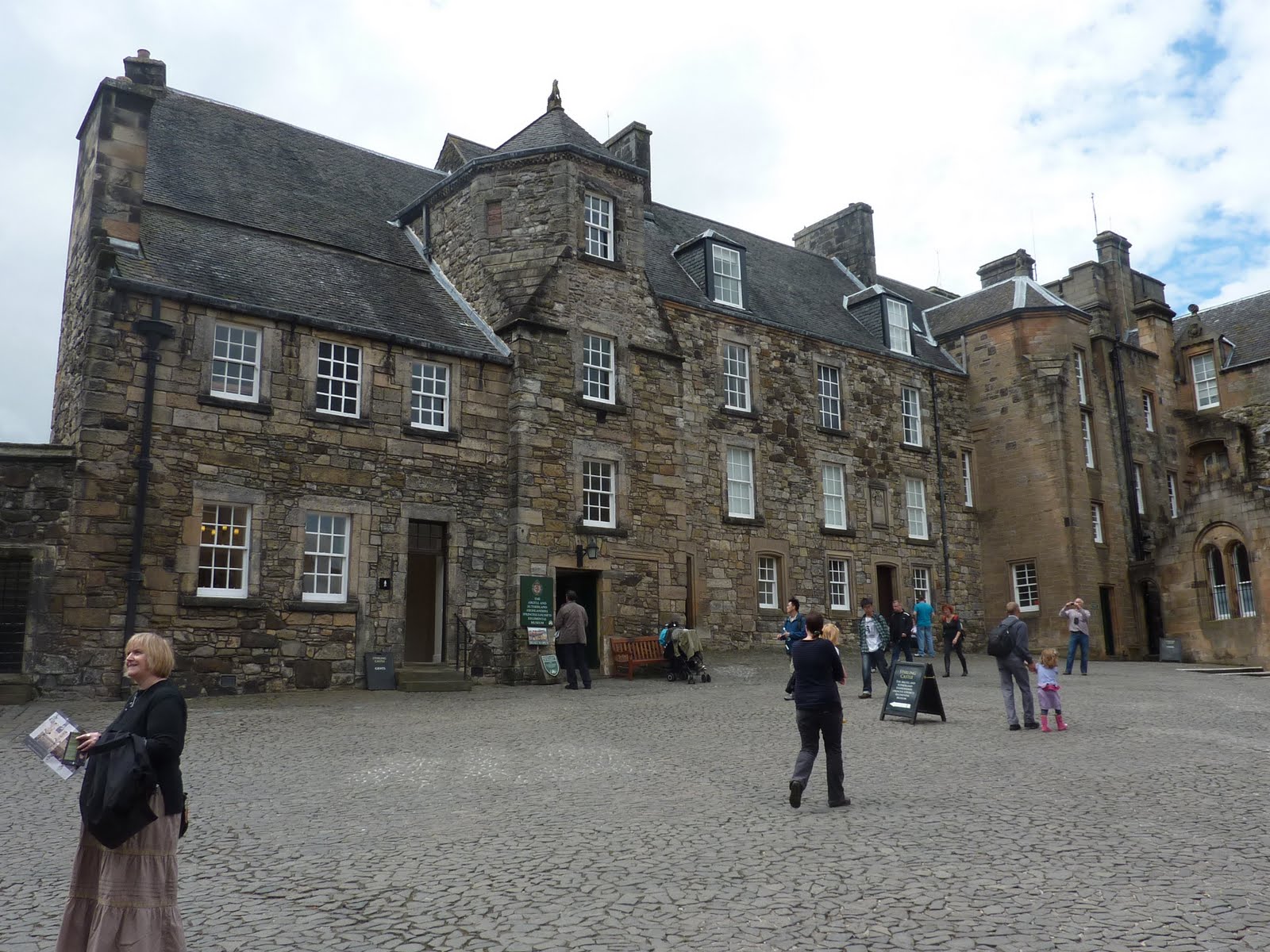
The weather had not improved when we woke, so we quickly got showered and sorted and left the camping ground. We drove north across the border into Scotland and, almost the instant we did so, the skies cleared and the sun came out. Sunny Scotland! We grabbed some lunch on the outskirts of Stirling and then we carried on into the heart of the city, to Stirling Castle.

Sitting high on a rocky crag, the magnificent Stirling Castle, which dominated Scottish history for centuries, now remains one of the finest examples of Renaissance architecture in Scotland. Earliest recorded history of the castle dates from 1124 and the present castle dates from the 15th century. We were greeted at the entrance to the castle by a massive statue of Robert the Bruce, one of Scotland's favourite heroes, who led the vastly outnumbered Scottish forces to victory over the English at Bannockburn in 1314.

The castle has been restored recently and provides a realistic picture of what it would have looked like through the 14th-16th centuries. There are also actors dressed in the traditional garments, who pose for photos and provide more information about life in the castle. We had a brilliant time wandering through the castle with a very thorough audio guide, which not only explained about the different parts of the castle and what they were used for, etc, but also gave a great account of some of the history associated with the castle, Scotland's monarchs, battles against the English, etc. It was fascinating. We had no idea that Stirling was such an important strategic location for invading (or protecting against invasion) the whole of Scotland.

After our castle visit, we drove across Stirling to the other big tourist attraction, the Wallace Monument. On top of another rocky crag stands the impressive 67m high Wallace Monument, which recounts William Wallace's defeat of the English at Stirling Bridge in 1297. We walked up the steep hill to the monument in time to hear a talk from an actor dressed as one of Wallace's men. Tim even got a photo with him and a massive sword!

Stirling itself is a very nice city - we parked in the city centre and walked around a few shops for a while (Stirling has an insane amount of hairdressers and barbers for its size - every third shop was a hairdresser!) and then had a drink at a pub on the main street. Megan then hit the jackpot by stumbling across an all-you-can-eat Chinese buffet restaurant. Exactly what travellers on a budget were looking for! We dominated - Tim even sought some tactical advice from his mate Simon, who is experienced in such endeavours. After dinner, we found a good spot on a quiet street in Stirling to park the spaceship and we had a wee whisky before bedtime. Great first day in Scotland!

Day 6: Perth, Scotland

We had a great night's sleep and woke to another glorious sunny Scottish day. After some breakfast we drove the short distance from Stirling to a little place called Auchterarder, to visit a relative of Megan's. It was lovely to see Renee and she had some useful tips for navigating around Scotland.

By the time we left Auchterarder, it had turned grey and a little drizzly, but it was not too bad. We carried on the road to Perth, another pretty little city on the banks of the River Tay. Perth was once the capital of medieval Scotland and its rich heritage is reflected in its many beautiful buildings.

We had a Boots lunch deal for lunch and we picked up some groceries for that night's dinner and then we had a nice, leisurely walk through Perth and along the south bank of the Tay. There were loads of sculptures all the way along the river bank, in amongst beautiful gardens, so it was a very pretty walk.

Later in the afternoon, we drove out of Perth to a camping ground near the small village of Dunkeld. We did some washing and dishes etc and cooked a really nice dinner on the gas stove next to the spaceship - sausages and beans on rice. Awesome. After dinner, we went for a walk to Dunkeld. It was very pretty - also built on the banks for the River Tay and it has a collection of cute cottages along its main street and an impressive war monument too! After our walk we did some more planning of what we would do in the coming days, played some cards and had a wee whisky / Baileys before bed. We love Scotland!

Day 7: Oban and Inveraray, Scotland

With washing done and water tank refilled, we left the camping ground and drove west from Dunkeld to Oban. We were treated to magnificent scenery all the way to Oban - we stopped several times for photos of beautiful green farmland lined with old stone walls, rugged mountains, rivers and lakes and even the odd highland bull! We stopped in a little village called Kenmore, on a lakefront, with an old castle wall, a pretty little church and a cute general store. We also stopped at a place called Killen, which had a river running through it, and we got a slice of carrot cake from the tea rooms - it was delicious!

We eventually arrived in Oban at around midday. Located on the Firth of Lorne and commanding a stunning view of the Argyll coast, the bustling port town of Oban is a popular tourist destination for travellers on their way to Mull and the Western Isles by ferry. We had fish n chips for lunch at a renowned fish n chip restaurant. It really was excellent. Then we walked up the steep hill to McCaig's Tower, a Victorian imitation of the Colosseum in Rome. There were amazing sea views from the top of the hill, so it was worth the trek!

We did some more exploring of the town centre and managed to find an internet cafe, which was quite handy, and then we carried on our merry way around the lakes to Inveraray. Inveraray is another cute little village on a lakefront, best known for its Gothic castle. We happened to arrive on the day that the Inveraray Highland Games had taken place. While the Games had finished, the place was full of people, so it was really buzzing. As the castle had also closed for the day, we wandered through town and found a nice pub, where we chilled out over a few Scottish ales, looking out over the beautiful lake. Later, we had pork and cheese rolls and some wine down by the lake for dinner and then we parked up for the night to get some much-needed sleep!


New-
castle


Megs by
Tyne
Bridge


Tim at
Hadrian's
Wall


Stirling
Castle


Stirling
Castle


Wallace
Monument


Tim with
"Wallace
sword"


Sunny
Stirling


Stirling
again


Megs in
Perth


Dunkeld
village


Kenmore
general
store


Highland
Bull


Megs at
Killen


Oban


Oban
again


Pretty
Scotland


Inver-
aray


Lake in
Inver-
aray


Saturday, July 16, 2011

Great Britain Tour - Part 1

Day 1 - Nottingham and Lincoln, England

On Wednesday 13 July, we ventured out to north-west London where we picked up our Spaceship rental car. We got a thorough demonstration of all of its gadgets and we were soon on way, Megan piloting and Tim navigating, as we drove north to Nottingham.

We arrived in Nottingham, the home of Robin Hood, parked the spaceship in the city centre and wandered through the pretty streets, reading the regularly-spaced information posts about tales of Robin Hood and his merry men. We also found a rather impressive statue of Robin Hood! As it was lunchtime, we made our way to the oldest pub in England - Ye Olde Trip to Jerusalem - which was established in 1189. We had a delicious pub lunch and a pint of the "Old Trip" ale, which was very tasty.

After lunch, we walked up the hill to where Nottingham Castle used to stand (it was destroyed and has been replaced with a lovely garden and a museum) and then we walked through the city centre and sat in the town square watching the people of Nottingham go about their business.

Later in the afternoon, we were on the road again, driving the short distance north-east to Lincoln. Lincoln has an interesting history - the Romans founded the first fortress there in 50AD. By the time of the Norman Conquest in 1066, Lincoln was one of the most important cities in England, after London, Winchester and York. Lincoln has retained much of its historic character. Many medieval buildings have survived, making a charming pedestrianised town centre. We had a lovely leisurely walk through the town centre and wandered through the magnificent Lincoln Cathedral. Behind Lincoln Cathedral is a statue of Alfred, Lord Tennyson, the Lincolnshire-born poet, who just so happens to be one of Megan's favourite poets!

As it began to get darker, we drove around Lincoln looking for a supermarket to buy some supplies, but alas, there was none to be found! So we had fish n chips for dinner, which turned out to be an inspired move, as they were awesome! Then we had a drink and played some cards at a quiet little local pub, called the Tennyson. That night we drove the spaceship back to the town centre and parked up outside the Lincoln Cathedral for the night. We watched the first half of a DVD that we picked up at the spaceship office - an advantage of the spaceship is an on board TV/DVD player! Excellent.

Day 2 - York, England

We woke fairly early to the chimes of the church bells. Just as Tim climbed out of the spaceship looking half asleep, a traffic warden was passing by and said in a rather 'school teacher telling you off kind of voice', "Good morning Sir". Tim said "Good morning" and explained that we were just about on our way, but he laughed and said we could take our time. Phew.

We left the supermarket-less Lincoln pretty early and drove north towards York. On the way we stopped off at a Services bay (these are everywhere in England and they are brilliant) and freshened up in the toilets and grabbed some breakfast. Thursday was a bright, warm and sunny day with a glorious blue sky - not always the case for a British summer!

We arrived in York around 11am and parked in the city centre, ready to explore. The city of York has retained so much of its medieval structure that walking into its centre is like entering a living museum. The appeal of York is its many layers of history. A medieval city, constructed on top of a Roman one, it was first built in 71AD. It was here that Constantine the Great was made emperor in 306 and reorganised Britain into four provinces. A hundred years later the Roman army had withdrawn. The city was renamed under the Saxons and then became a Christian stronghold. The Danish street names are a reminder that it was a Viking centre from 867 and was one of Europe's chief trading bases. The glory of York is its minster - the massive church in the centre of the old city. The city also boasts three mile-long medieval city walls and plenty of elegant Jacobean and Georgian architecture.

Our first stop was at Whip-Ma-Whop-Ma-Gate, York's tiniest street with the longest name. It dates from Saxon times and means "neither one thing nor the other". From here we checked out some of the lovely shops on the cobbled streets as we headed for York Minster. Sadly, the entry fee for York Minster was £9 each - as travellers on a budget, we decided to flag that and enjoy it from the outside! York Minster is the largest Gothic cathedral north of the Alps - it is 158m long and 76m wide across the transepts. The first minster began as a wooden chapel in 627. The present minster was begun in 1220 and was completed 250 years later.

We grabbed a Boots lunch deal (sandwich, snack and drink for £3.29 - get in) for lunch and ate it sitting in the sun on a lawn outside one of the many college buildings in York. After lunch we picked up some supplies at a supermarket (thank you York for having supermarkets) for that night's dinner and then we walked around the old medieval city walls - a great way to view the historic city centre and to learn about its history. In the late afternoon, we drove slightly out of York to a campsite and set up for the night. We tested out the gas cooker in the spaceship and managed to create an amazing dinner of mince, tomatoes, mixed green veges and rice. It was a beautiful evening, so we could sit in the sun on the grass next to the spaceship and dine al fresco!

Day 3 - Fountains Abbey and Durham, England

The birds woke us very early on Friday - but that was OK, because it was another cracking day. We made use of the excellent bathroom facilities at the campsite and then we were on our way, heading north-west to Fountains Abbey.

Nestled in the wooded valley of the River Skell are the extensive ruins of Fountains Abbey and the outstanding water garden of Studley Royal. Fountains Abbey was founded by Benedictine monks in 1132 and taken over by Cistercians three years later. By the mid-12th century it was the wealthiest abbey in England, though it fell into ruin during the Dissolution. We begun our 2.5 hour walk through the massive area at St Mary's Church, a Victorian Gothic church built in 1871-1878. We were given a guided tour of the church, which was very interesting. Then we walked across Deer Park (although we saw no deer) and walked around the lake and the moon pond, decorated with wonderful statues and beautiful gardens.

Up a steep hill is Anne Boleyn's Seat, which provides a stunning view down to the abbey ruins. We concluded our tour by checking out the abbey up close. It was so nice to be in the countryside, surrounded by the woods, on such a lovely morning. After all that walking we had worked up an appetite, so we drove on to Durham, where we fed our bellies.

The city of Durham was built on Island Hill in 995. The rocky peninsula was chosen as the resting place for the remains of St Cuthbert, a very important figure in this region, a revered monk and miracle worker. Durham Cathedral dominates the hilly peninsula in the centre of the city. It was built from 1093 to 1274 and it shares the hilltop with Durham Castle, begun in 1072. The relics of St Bede were also brought to the Cathedral, adding to its attraction for pilgrims.

Durham Castle was closed for renovations, so after our lunch in the town square, we visited Durham Cathedral. We both really enjoyed it, as it was filled with very modern art and sculptures, which made for a nice change. Tim particularly enjoyed seeing the tomb of St Bede (having studied at St Bede's College in Christchurch). We even grabbed a sneaky photo (below).

After our cathedral visit we went for a long walk around the outskirts of the town centre - Durham is very pretty with lots of greenery and a lovely river running through the middle of the city, beneath the towering cathedral and castle. We went back to the town square where there was a very colourful and entertaining band playing, so we watched them for a while and then picked up the spaceship and drove north to a little town on the outskirts of Durham called Chester-le-Street, where we found a great pub. We parked there for the night (free camping) and had dinner and drinks in the pub. It was a really fun night.


Robin
Hood


Oldest
pub in
England


Inside
the pub


Site of
Nottingham
Castle


Lincoln
town
centre


Statue of
Tennyson


Tim by
the space-
ship


York
Minster


York's
tiniest
street


York
Minster


Megan
on the
city
walls


Cooking
dinner by
spaceship


And
eating
it!


St Mary's
Church


Fountains
Abbey


Durham
Cathedral


Tomb of
St Bede


Megan
in Durham


Musicians
in Durham
town centre