Monday, August 29, 2011

Gallipoli, Turkey

Saturday: Istanbul, Turkey

On Saturday 20 August, after a very refreshing and relaxing two days in London at our friend Simon's place, we got up at some ungodly hour to catch a taxi out to Heathrow and fly to Istanbul. Our flight left at 7.10am and arrived in Istanbul at 12.50pm Turkish time.

We got a taxi from the airport into our hotel in Sultanahmet, the old town of Istanbul. The taxi driver was a complete loser - he told us it would cost 50 lira, when the airport information desk had suggested that we should pay no more than 30 lira. We insisted that he use the meter since he thought 30 lira was a ridiculous price. He used the meter and drove like a nutter all the way, speeding way over the limit, swerving all over the road and slamming on his brakes regularly - apparently this is normal in Turkey! Surprise, surprise, the meter read 33 lira when we arrived at the hotel. We gave him 35 lira and he snatched it from our hands and glared at us. Grrrr.

The hotel (Deniz Houses Hotel) was solid. Pretty basic, but in a good location. It was clean and had air conditioning and a shower - relative luxury after 5 weeks of camping and sleeping in a car. We rested at the hotel for a while and then set off to grab some lunch. We found a great little cafe just down the road, where we got a mixed meat and yogurt kebab (Tim) and hummus, flatbread and a crushed tomato salad (Megan). We then wandered around Sultanahmet, not achieving much as we had visited Istanbul before, for three days in 2008, so we had seen the sights we wanted to see and this trip was only really to see Gallipoli.

We got some photos by the famous Blue Mosque and Haghia Sophia, which were looking beautiful with flower gardens in the foreground and a bright blue sky background. We then walked along the main street to the Grand Bazaar market. It was just as we had remembered it and with no desire to purchase anything, we had a quick walk through and then headed back to the hotel.

We decided we should book our bus to Bulgaria in advance. This proved rather more difficult than it should have been. After finding the correct website with the help of our hotel receptionist, we went right through the booking process and were then thwarted at our attempt to pay for the tickets, as the website would not accept any of our credit cards. Of course, you cannot book or pay over the phone (that would be too easy) and all of the 55,000 travel agents in Sultanahmet told us that they were not affiliated with the particular bus companies that travel to Bulgaria, so they could not sell us tickets.

Almost three hours later, we managed to buy tickets at the only helpful travel agent in Turkey - so we would bus from Istanbul to Varna, Bulgaria on Monday morning - a 9-hour ride, we were told... With that sorted, we had a delicious dinner at a restaurant called Faros, on the main street and then walked back to our hotel. The city was absolutely buzzing - apparently it was Ramadan, which meant that after sunset, all the townsfolk came out and had dinner (mostly picnics on the grass etc) and there were concerts, buskers, market stalls, and all sorts to keep people amused. It was amazing.

Sunday: Gallipoli Day Tour
For what was neither the first nor the last time on this short trip to Turkey, we woke at a ridiculous hour, fumbled about in the dark, banging into walls and the like, showered, dressed and headed down to the hotel lobby, ready for our 6.15am tour pick-up. The tour left Istanbul at 7.00am (after many hotel pick-ups) and we drove west out of Istanbul and then south down the peninsula towards Gallipoli. The drive took around 5 hours, including two comfort stops.

Our first stop in Gallipoli was for lunch at a decent enough restaurant, where we ate soup, salad, kebabs, rice and chips etc. and sat next to an older Dutch couple, who were nice enough, but very Dutch. After lunch, we drove a short distance to the coast and had an explanation of the Gallipoli landing, what had taken place and what the Allied Forces were trying to achieve.

The most accepted story goes that the Anzacs were supposed to land at a patch of coastline that was flat, but through some navigational error, actually landed a couple of kilometres further along the coast, where they were met by massive steep rocky cliffs, which made them sitting ducks for the Turkish troops, perched high on the clifftops. There are counter-theories that suggest that the troops intentionally landed by the steep cliffs, as there were far greater numbers of Turkish soldiers waiting for them at the intended landing spot.

After our background talk from our tour guide, we visited a number of locations on the rugged peninsula, the first of which was the Lone Pine Cemetery. This was the site of an important battle and it is now one of the largest cemeteries at Gallipoli, where mainly Australian (and some New Zealand) troops are buried. It was extremely moving reading the messages on the gravestones of the men/boys (often as young as 18 and 19) who died there. Some messages were written by their mothers. It was tragic to see so many rows of gravestones - such a waste of lives.

There is a pine tree growing at the entrance to the Lone Pine cemetery, which was planted around 20 years ago from a cutting or seed of a pine tree situated in Australia, which was itself planted from a cutting or seed of a pine tree that was growing in Gallipoli during WWI, and had been taken back to Australia at the end of war to grow a remembrance tree in Australia for the fallen soldiers. That was pretty cool.

The next stop was the trenches, where the soldiers had fought for months, right next to Johnston's Jolly cemetery. The trenches were still clearly visible, although not as deep as they would have once been. We then visited a Turkish soldiers' cemetery, the only Turkish cemetery in that part of the peninsula. Sadly there were quite a lot of tacky souvenirs for sale at most of these sites, but it is amazing that the Turkish government has allowed all of these Anzac cemeteries and memorials to be maintained here, on their land, the land that foreign troops invaded.

A Turkish general who led the Turkish forces in WWI at Gallipoli, Ataturk, had claimed after the war had ended that all of the Anzac troops who died and were buried on the peninsula were now "at home", to be treated as no different to the Turkish troops who died in the battle. That is quite amazing.

We then visited the New Zealand memorial, which is on top of Chunuk Bair, the highest point of the peninsula. Apparently New Zealand and British troops took control of this peak, a very important strategic location on the peninsula, for a couple of days before losing it again, which is why the memorial is located here. It has stunning views down to the coastline where the Anzacs landed, and also across to the other coastline in the opposite direction, which is where they were trying to get to. Next to the New Zealand memorial is a massive statue of General Ataturk.

Our final stop was at Anzac Cove itself, the landing spot. There is now a memorial wall and some information plaques about the landing and this is where the Dawn Service is held every year on Anzac Day. We stood on the very beach where the troops had landed 96 years earlier and looked up at the massive steep cliffs that they had to attempt to climb. The beach is so beautiful and the place is so quiet and peaceful - it is difficult to understand what it must have been like for the troops running up the beach, under fire from the Turks. Around 120,000 men died at Gallipoli in total, around 80,000 of them Turks. There were approximately 8,500 Australian and 2,800 New Zealand casualties.

The tour guide we had was OK - we got the feeling that some of the information he gave us was a little dubious and things were poorly organised in parts, but you don't have a lot of choice for Gallipoli tours. We felt extremely privileged to have been able to visit Gallipoli and to see it from all of the different vantage points was a great way to help us understand how the battle had unfolded etc.

The drive back to Istanbul took about 5 hours, meaning that we got back to the hotel at 10.30pm, completely shattered. We had to do a little bit of arranging of our things and packing, because we had another early start coming up!

Monday: Bus to Bulgaria

We left the hotel at 7.45am and caught a taxi to the main bus station in Istanbul. Thankfully we found our bus, as there are literally hundreds of buses and dozens of different bus companies that operate from the huge bus station. We stocked up on some supplies for the long ride ahead. The bus was fairly comfortable and departed on time at 9.00am.

It was a fairly uneventful bus ride really, although two separate women threw up near us during the journey...thankfully they had little sick bags that were thrown out the door on to the roadside, keeping the bus impeccably clean and fresh smelling. We had a few refreshment stops along the way too and a border crossing, where Tim was almost left behind in the toilet on the Turkish side of the border. Not cool.

Once across the border into Bulgaria, the views improved significantly. We were treated to spectacular views of mountains, rivers and forests and eventually coastal views, as we drove north along the Black Sea coast towards Varna. We arrived in Varna at 5.45pm - country number 48 for Megan and 44 for Tim!


Blue
Mosque


Haghia
Sophia


Blue
Mosque


An obelisk
thing...


Megs and
a pretty
round
thing


Grand
Bazaar


Our tour
guide


Anzac
Cove


The
beach
at Anzac
Cove


Cemetery
on the
beach


Statue of
Turkish soldier
helping Anzac
soldier


Australian
memorial


Lone
Pine
cemetery


Trenches


Turkish
cemetery


New Zealand
memorial


Lovely
hat


Friday, August 19, 2011

France Road Trip - Part 2

Day 7: St Emilion, Bordeaux

We started off the following day by driving west into the Bordeaux region to St Emilion, a gorgeous little town east of Bordeaux city. St Emilion is a UNESCO World Heritage Site, dating back to prehistoric times and with vines originally planted by the Romans! It seems everywhere we go, there is either a Roman ruin to inspect or some Roman tale to learn about.

St Emilion was named for an 8th century monk, who decided to hollow out a bit of a rock nearby. The poor guy just wanted the quiet hermit life, but alas, a devoted following joined him in his rock cave and started the good times rolling with a bit of wine production. Nowadays, there are underground wine caves, Roman ruins and Romanesque (again) churches to visit, along with cute stone paved streets, amazing resturants and macaroon shops to sample. Great place!

It was very hot and sunny in St Emilion and we wandered around the medieval town, checking out the churches, prety squares packed with cafes, and ruins of town walls and then visited some of the wine caves and tasted various wines, where the proprietors were good enough to explain details about the Bordeaux region to us, such as the different types of soils and the different types of grapes and wine that result from the soil type and location. We bought a few bottles and headed back to the car for some lunch. As we were eating we saw a familiar green t-shirt walking past us - Libby and Ben had arrived!

Together we visited a wine cave featuring wine from the Lussac area, which was where Libby and Ben had found us a campsite for the night. The guy providing us with tastings had spent a year in Marlborough, which was pretty random. Until then, we had found that nobody in Bordeaux knew much about New Zealand or its wines (snobs!) As well as explaining the qualities of the wine, he helpfully answered our questions about what qualifies as a Bordeaux wine, and what permits a winery to label its wine "Grand Cru" (very complicated, including harvesting by hand and passing tests by expert juries).

We left Libby and Ben to explore St Emilion and travelled out of town to check out the surrounding area. We pulled up to a wee estate which looked closed, but we were warmly welcomed in by the enthusiastic owner. We loved the family owned and operated aspects of wine production in Bordeaux and met people with so much passion for their business. This man was no exception, and he talked about the two areas in which he has vines and also explained the harvest process. We rather foolishly asked if the way they know when to harvest is to taste the grapes - turns out it is a lot more scientific than that, involving acid and sugar level testing, laborotories and what not!

With an impressive stash of Bordeaux wines on board, we thought it was time to park up the Spaceship for the night. The campsite Libby and Ben had found was really cool, set amongst a massive vineyard and coming complete with a swimming pool, sauna and play area (including a bouncy castle!) We had a great dinner of sausages cooked by Ben on his charcoal BBQ, salad and some local grapes. Very local, in fact. And of course, a little bit of red wine...ok, a lot of red wine.

Ben and Tim tested out the bouncy castle after dinner and can say that it was not quite as sturdy as they would have liked. You would expect bouncy castles to be solid and safe, you don't want them collapsing in on themselves. Not ideal.

Day 8: Bordeaux

The next day involved a rather slow start, and with such beautiful weather and a great campsite, it wasn't difficult to decide to stay another night. This decision was made even better when we discovered that it was all you can eat mussels and fries at the campsite restaurant that night!

We did some tidying up and admin sort of jobs and then forced ourselves to do something active in the afternoon - we hired bikes from the campsite and explored the surrounding area, picking up some blackberries so that Libby could attempt to make some blackberry jam. Impressive camping cuisine!

Our find for the day was the Chateau Vieux Mognac, where a delightful lady who spoke no English at all showed us around her vineyard with a friendy English family acting as translators. We sampled some white wine for a change (a sweet, almost dessert wine) as well as several delicious reds. We decided to buy a bottle of the sweet wine wine - which turned out to be a great apertif to our mussels - and a bottle of the 2003 red.

Dinner was all we had hoped for - fantastic mussels and fries and a little bit more wine on a stunning evening. Certainly not a busy day, but a great chance to relax in the beautiful sunshine and countryside of Bordeaux.

Day 9: Biscarosse Plage, Bordeaux

On Friday morning we decided to head out to the beaches west of Bordeaux city. Our original choice of Lacanau was under seige from Portuguese Men of War jellyfish, and given our previous run-ins with the Portuguese, their Men of War did not sound like something we wanted to mess with. So we headed for Biscarosse Plage, 200km or so north of the Spanish border.

We soon realised that a lot of people shared our plans! After a few stints in crawling traffic on poorly designed French motorways with crazy French drivers and sweaty conditions, we were glad to arrive at Biscarrosse and parked up in an "Aire Picnic" for some lunch. We then found a free camping spot down near the beach, strategically positioned next to a campsite where Libby and Ben had checked in. There are a number of quiet spots in France where free camping is tolerated and public toilets are usually provided. We were also happy to note that the campsite entry points were not manned, meaning a sneaky shower was on the cards too!

We met the others down at the beach, where we nestled into a spot amongst crowds of other visitors and chilled out for a few hours. Libby and Ben went off surfing at one point, but we were very lazy and remained essentially motionless. Delightful. Later in the day, we made our way back to the spaceship to shake some sand off (unsuccessfully as always - we were destined to be accompanied by Biscarrosse sand for the remainder of our journey) and then joined the others for a pizza dinner as night fell.

Day 10: Journey to Loire Valley

After a very good night's sleep by the Biscarosse beach, we said farewell to Ben and Libby and got going fairly early on Saturday morning, heading north-east towards the Loire Valley...or so we thought! We knew it would be a pretty big driving day to get to the Loire Valley (approx 3.5 hours), but then we figured we would need to drive much for the few days after that.

Unfortunately, we had a Sat-Nav incident combined with an extremely unfortunate coincidence. We decided to head to a town called Saumur in the Loire Valley as our first stop, and then explore the rest of the region from there. Apparently there are two towns named Saumur in France and both happen to be about 3.5 hours driving distance from Biscarosse, meaning we did not pick up the problem when we entered the incorrect Saumur into the Sat-Nav - now is that bad luck or what?!

It was only three hours into our journey that we discovered the mistake and when we turned the car and headed for the correct Saumur in the Loire Valley, we had another 3.5 hours to go! We had headed east, past Bordeaux and then north (all correct) but then somewhere along the way we had gone east and then south again toward the centre of France, rather than continuing north. Needless to say, we were unimpressed. It meant that our entire Saturday (a sunny, hot Saturday) was spent in the spaceship driving for nearly 7 hours, burning expensive petrol as an extra punishment.

We eventually arrived in the proper Saumur, a pretty town between the Loire and Thouet rivers, and we stayed in a camping ground next to one of the rivers. It was pretty decent and we cooked dinner of rice, mince, veges and tomatoes on the camping stove and charged our electrical gadgets before hitting the hay. We needed a big sleep after such a day!

Day 11: Saumur, Tours and Chenonceau, Loire Valley

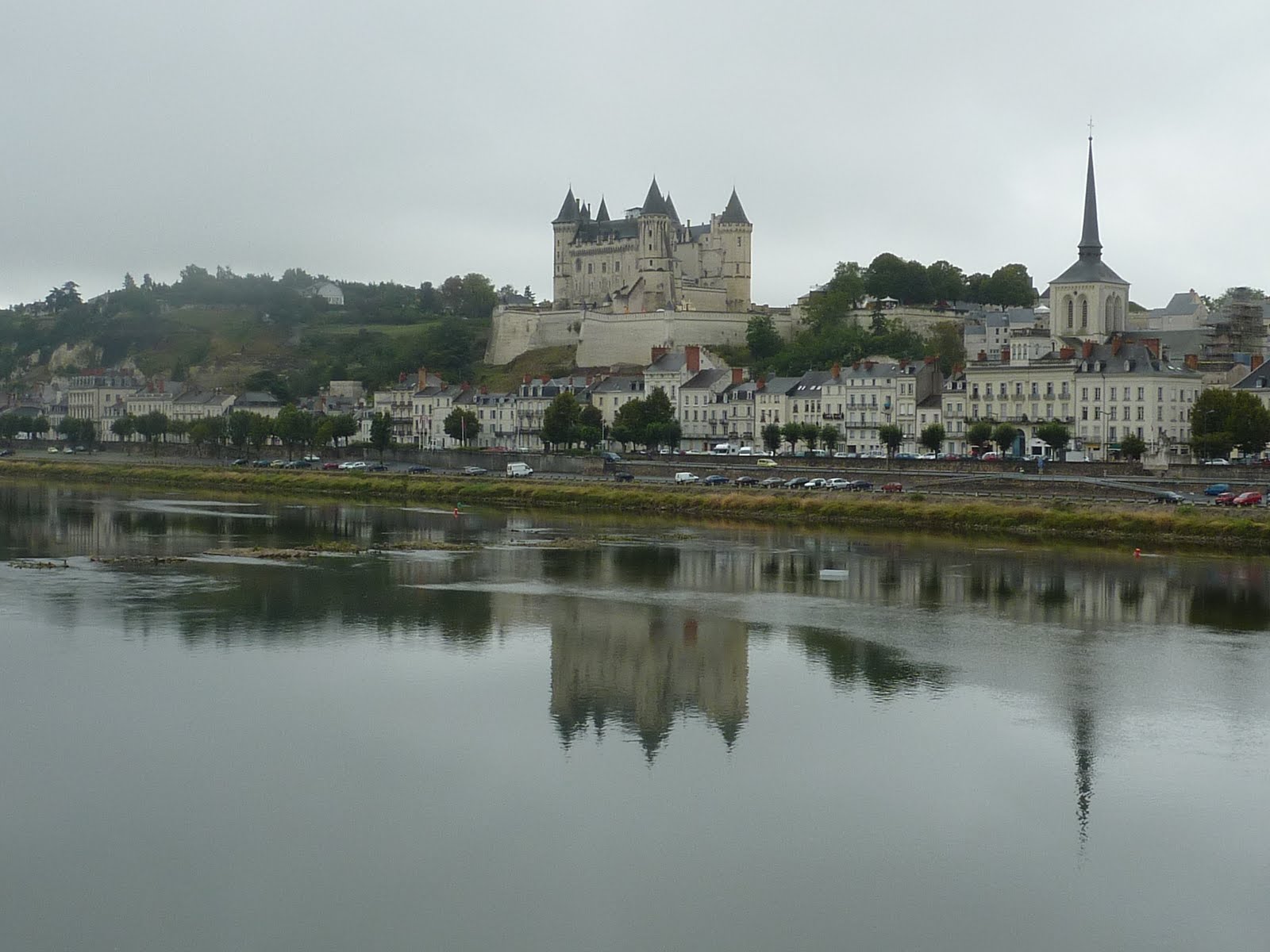
Sadly we woke to a wet, grey Sunday morning in Saumur. Booooo. We had a little look around Saumur and went up to the majestic looking Saumur chateau, perched on a hill overlooking the town and river below. You cannot go inside the Saumur chateau, so we quickly moved on after viewing the outside and then decided there was little else to amuse us on a wet morning in Saumur.

We drove an hour or so east to Tours, which was a nice enough city. There weather had cleared a little, so we had a walk around town. The highlights were the beautiful Hotel de Ville in the city centre and the small medieval old town, with pretty buildings and churches. We had lunch in the spaceship before pushing on to Chenonceau.

While the village of Chenonceau is tiny, the Chateau de Chenonceau, which happens to be one of the biggest and most famous of France's chateaux, draws mammoth crowds all year round. The chateau has been destroyed and rebuilt several times over the centuries but the current manor was designed by French Renaissance architect, Philibert Delorme. We manged (somehow) to find a park and get tickets to go inside the chateau. It was insanely packed inside - you could barely move - but as it was still raining on and off outside, we thought inside was not a bad option.

We got a brilliant audio guide, which gave a detailed explanation of each room that we visited and what used to go on in there, as well as an overview of the history of the chateau. It was very interesting. We loved the tiny chapel - not much bigger than your average lounge at home - and also the Great Hall, a huge wide and long decorated hall that actually spans the River Cher on a number of arches.

After our indoor tour, it had stopped raining, so we walked through the beautiful gardens outside the chateau and then retired to a pub in the village of Chenonceau. We ended up having dinner there too and then free-camped in a quiet carpark in the village.

Day 12: Chateau de Chambord and Chartres, Loire Valley

We were a little slow in getting going on Monday morning, thanks to the extremely quiet, peaceful spot we had camped in. We drove from Chenonceau to the Chateau de Chambord, the other main tourist-favourite chateau in the Loire Valley. This chateau is one of the most recognisable in the world due to its very distinct French Renaissance architecture. We decided not to go inside this one, as it is not furnished or decorated like the Chenonceau chateau and there were literally hundreds of people queuing up for tickets to get in. So we enjoyed it from the outside, as we had a picnic brunch on the grass. All of the chateaux that we visited were stunning from the outside, like fairy tale castles.

As the throngs of tourists were getting overwhelming, we hopped in the spaceship and left Chambord chateau behind, heading north towards Chartres, via a brief stop in Orleans, where we picked up some supplies at the Auchan hypermarket - love that place!

Chartres was lovely. We arrived in the middle of the afternoon and we explored the town centre, admiring the famous Chartres cathedral from the outside and then doing some much needed blogging in an internet cafe. We found a great camping ground (probably one of the best we had stayed at in the whole trip) on the outskirts of the city, where we also did some much needed washing and dishes! Then we sat in the beautiful evening sun and enjoyed breads, cheeses, meats and a "bit" of red wine. We had to get rid of some of the bottles we had bought before we gave up the spaceship and were on foot once again!

Day 13: Chartres and Le Quesnoy

Tuesday was our last full day in France and we had to get up towards Dunkirk for our Wednesday morning ferry. We left the camping ground pretty early and drove into Chartres, where we visited the Chartres cathedral.

The Chartres cathedral is one of the finest examples of French High Gothic styled cathedrals. The current cathedral was built between 1193 and 1250. Its most striking feature is its massive collection of stained glass windows, all of which are originals dating from the 13th century. They were removed piece by piece to avoid being destroyed during bombing raids in WWII. We marvelled at the hundreds of amazing stained glass windows all over the huge cathedral and we also admired the labyrinth design on the floor of the cathedral and the extensive carvings.

After the cathedral tour, we grabbed an early lunch at McDonald's and then drove the 3 hours or so north, around Paris and up towards Lille. Just south of Lille lies the town of Le Quesnoy, a town that was liberated by New Zealand soldiers at the end of WWI. It is a town that is (still today) surrounded by huge fortification walls, which the New Zealand troops used long ladders to climb over and chase the Germans out of the town. The town is very grateful to New Zealand for freeing it from the Germans and there are a number of markers to commemorate little old NZ, including several streets being named after prominent New Zealand troops and even one street being named Rue Nouvelle-Zelande / Rue Aotearoa.

We stopped in and wandered through the town centre and visited the New Zealand memorial plaque on one of the fortification walls. We met a few Kiwis there, including one man from Waikanae, who had come all the way to France to visit the grave of his great uncle who had died climbing the very walls we were looking at. It was quite special to be able to visit the place and to see that there were significant memorials for the troops all over town.

We then drove on further north, around Lille and we eventually found a great "aire" (services area) just half an hour south of Dunkirk, which was complete with cafe, shop, picnic area, toilets, showers, free Wifi, TV, ATM - pretty much everything we needed and more! We stayed there the night, our final night in France.

Day 14: Return to London

In the morning, we woke early, got our stuff packed up all tidily and tried to clean up the spaceship as best we could. Then we drove the short distance into Dunkirk city centre, where we sent some postcards and got a snack for breakfast. Then it was on to the ferry terminal and back to the UK.

The ferry ride was smooth and uneventful. We enjoyed seeing the famous white cliffs of Dover as we approached England. We drove from Dover to London (on the left hand side of the road) and dropped off the spaceship at the space station. It was a little sad to let of go of Flash, but we were excited about not sleeping in a car again for a long time.

For the record, we managed to drive 4,697 miles (7,559 km) across six different countries in 36 days. That's about 7.5 lengths of the South Island of New Zealand. Nice work Flash!


St
Emilion


Megs in
St Emilion


Wine
cave


St Emilion


Bordeaux
vineyards


Megs in
St Emilion


Chateau
Vieux
Mognac


Bordeaux
Bear


Saumur


Hotel de
Ville,
Tours


Chenon-
ceau
Chateau


Ditto


Chateau
de
Chambord


Tim at
Chambord


Megs at
Chambord


Chartres
Cathedral


Stained
glass
windows -
Chartres
Cathedral


Megs
at Le
Quesnoy


NZ memorial
Le Quesnoy


White
cliffs of
Dover


Thursday, August 18, 2011

France Road Trip - Part 1

France

We drove off the ferry in Dunkirk at around 9pm French time and we headed into the centre of Dunkirk, where we parked up in quiet public carpark for the night.

Day 1: Lille

Thankfully we woke a lovely sunny day in Dunkirk. We set off, heading south for the picturesque city of Lille, close to the Belgian border in north-east France. The drive took only 45 minutes or so, meaning we had all day to explore Lille. We parked in the centre of the city and after a quick pit-stop at the Tourist Information Office, we set off to admire the beautiful buildings, churches and large open squares and gardens that the city has to offer.

We grabbed some delicious sandwiches for lunch at a bakery and then we stocked up with some picnic supplies at a supermarket - a baguette, some cheese and cold meats and a bottle of red wine - which would make for a fine dinner that night. We also managed to find a good internet cafe in the city centre, so we caught up on a bit of blogging and checked what was happening in the world. Unfortunately, the British weather must have followed us across to the continent, as it started raining in the afternoon and it carried on intermittently for the next few days. Booo.

We made our way to a rural camping ground outside of a small village south of Lille, where we quickly realised that outside the main centres, fluent English is hard to come by, so we had to call on our high school French comprehension skills more often than expected. We spoke to the manager of the camping ground, who explained in French that we should drive down the long driveway, turn left and park near the sheep... We figured we had heard something wrong, but sure enough, there was a paddock with a few sheep, some dogs, a goat, some hens and even a turkey, right next to the camping ground. Due to the wet weather, our picnic had to be inside the spaceship, but at least we had a DVD of Father Ted episodes to keep us amused.

Day 2: Reims, Champagne Region

We got showered and sorted at the camping ground and then drove south for two hours to the city of Reims, in the heart of the Champagne wine region. It was a cloudy morning and at times during the drive it rained, but the time we arrived in Reims, the weather was OK. We found a great parking spot right in the middle of the city centre and we headed for the Tourist Information Office, where we got some information about tours of champagne houses. It seems that everything closes for two hours in the middle of the day in France - from 12-2pm everybody is on their lunch break, so pretty much everything stops.

The Champagne region in France is a large, historic province in the north-east of France that is now best known for the sparkling white wine that bears its name. Despite a loose use of the term "champagne", officially only sparkling wine made in that region can be called "champagne". After 2pm, we walked to the Mumm champagne house in Reims, where we went on a brilliant tour of their cellars, learning about the history of the company and how champagne is made and stored. It was fascinating. Their cellars alone contain 25km of passageways and over 25 million bottles of bubbly. Some bottles date from the 1850s, although only the Master Taster has the keys to that particular vault! After the tour, we got on to the tastings. We tried two different types, the regular Brut Cordon Rouge and the 2002 vintage. Both tasted great to our untrained palates, and we bought a bottle of the regular Brut from the gift shop.

Later in the afternoon we visited the Reims Cathedral, a massive structure dominating the city centre. The cathedral dates from 1211, although a church has stood on that site since around 400AD. No fewer than 25 French kings were crowned in the cathedral and there is a lovely statue of Joan of Arc, who apparently witnessed the coronation of King Charles VII there. We also loved the beautiful stained glass windows in the cathedral.

In the evening, we found a great spot to park for the night, near the Place de la Republique, next to some old Roman ruins. It was a sunny evening, so we again had a picnic dinner on the grass - similar to the previous night: baguette, cheese, meats, smoked salmon, fruit and white wine. All very tasty and very cheap.

Day 3: Epernay, Champagne Region

We woke to a hot and sunny Saturday morning in Reims, so we hit the road pretty early for a drive through the picturesque tourist route of the Champagne region. Sadly, before long, the clouds rolled in and the rain returned, which made the drive a little less picturesque, but still enjoyable. The countryside is so beautiful - packed with row after row of vines and then the odd little village or windmill here and there.

Around midday, we arrived in Epernay, the other main city in the Champagne region. We walked around the city centre and got some lunch at a nice little cafe/restaurant with a rude waitress. Megs had spaghetti carbonara and Tim had pizza (those two famous French dishes...). At 2pm, we visited the Castellane champagne house, set on the bank of the river in the middle of Epernay. We did not do the full tour, but we had a look at their small museum and we climbed the massive tower, which gave great views across the river and the town below. We also had a tasting there, but decided not to purchase.

After some shopping and a bit of internet action, we left Epernay and drove across to Chalons en Champagne, where there was an excellent camping ground waiting for us. We had a familiar dinner (see previous evening's dinner details) and watched some more of our Father Ted DVD to round off another great day in France.

Day 4: Lyon

We were greeted by another beautiful sunny morning on Sunday. It was going to be a big driving day, so we headed off from the camping ground quite early. We drove the four hours south to Lyon, France's second largest city after Paris, with Tim taking the first half and Megan the second half of the driving.

We had not appreciated how massive France is. Even with excellent roads (three lane autoroutes with speed limits of 130kph), it took us so long to get between the areas we wanted to visit. It also took a lot more petrol and toll charges than we had anticipated. So we decided to cut a couple of over-ambitious parts out of our two-week tour - the south coast and Marseille got the chop, as did a day at Versailles. This meant that we could spend less time behind the wheel and more time in each of the places we did visit.

We arrived in Lyon shortly after 2pm and we had received text confirmation en route that our friends Ben and Libby (who are travelling around Europe in a van) were going to be passing through Lyon, so we were excited to catch up with them.

Lyon is a large city in east-central France in the Rhone Valley region. The city is known for its historical and architectural landmarks and was also historically known as an important area for the production and weaving of silk. These days it has developed a reputation as the capital of gastronomy in France. Lyon straddles two rivers, the Rhone and the Saone, which converge to the south of the historic city centre, forming the central "presqu'ile" or peninsula. On the west of the Saone river on a steep bank lies the original medieval city of Vieux Lyon (Old Lyon).

Very little in the way of shops and attractions are open on Sundays in France. Even most supermarkets are closed (some may open for a few hours in the morning if you are lucky). The Old Town was about the only place where anything was happening, so we headed there and wandered through the narrow and crowded cobbled alleys, passing beautiful cafes, bars and specialty shops. It was all very cute. We stopped at a sort of delicatessen shop, where we bought two bottles of Rhone Valley red wine, but we were unable to find much in the way of food for dinner.

Late in the afternoon, we met Ben and Libby and we all headed 8km north-west of Lyon to a fantastic camping ground. Camping is very popular in France, so the quantity and quality of camping grounds tends to be very high. We got a pitch right next to Ben and Libby (their van is brilliant - much bigger than our spaceship, so far more storage space and better cooking facilities etc, although Flash would dominate in a speed test). We had pizza from the camping ground restaurant for dinner and had a few wines. It was great catching up with Ben and Libby and exchanging crazy tales from our travels.

Day 5: Lyon

We had finally found consistent summer in Lyon. We woke to a glorious sunny morning and after getting washed and sorted out, we said "A beintot" to Ben and Libby and headed back into the city for a day of exploring. Our first stop, however, was a massive hypermarket just next to the camping ground, where we stocked up on all sorts of delicious food and drink. We had never seen anything like it - this place was about 3-4 times the size of most supermarkets we had seen. You could actually get lost in there. We got plenty of breakfast, lunch and dinner foods for the coming days and also some local wine. Wine is so cheap in France - we found good quality French wines for as low as 2 euros a bottle in the supermarkets. A bottle for 5-6 euros was excellent quality. Love it.

Once back in Lyon, we parked the spaceship in the middle section of the city (presqu'ile), where we discovered there was free parking on Sundays, public holidays and the entire month of August - which is more or less a public holiday in France! Unfortunately, all of the audio guides for self tours of the city were taken by the time we got to the Tourist Office, so we had to make do with our guide book as we explored the city.

We headed back across the Saone river and climbed up the steep hill to the Basilica of Notre Dame de Fourviere, the huge church on the hilltop, overlooking the city. The basilica was built with private funds between 1872 and 1896 in a dominating position in the city as a mark of triumph of Christian values over the socialists of the Lyon commune of 1870. The basilica receives 1.5 million visitors annually. There is a big viewing platform at the front of the courtyard next to the basilica, which gives stunning views of the city below. After admiring the views of the city and rewarding ourselves with a cold Fanta for making it to the top of the hill, we checked out the inside of the basilica, which was beautifully decorated.

Just south of the basilica is the ancient Roman theatre of Fourviere. The theatre was built around 15BC, although the final part of the construction was completed around 200 years later. It is still in excellent condition today and it is used frequently for concerts and festivals. Once we descended back down the hill, we wandered through some more of the pretty streets of the Old Town and then we crossed the Saone and had a late picnic lunch in a park - it was such a lovely hot sunny day.

The rest of the afternoon was filled with some lazy strolling the presqu'ile section of the city, where we looked in a few shops, sat by beautiful water fountains, watched people passing by, and used a luxury public toilet, fully decked out with highlighter coloured toilet paper! Interesting. In the evening, we moved the spaceship to the east side of the Rhone river, we we free camped for the night. It was a little noisy, but otherwise fine, and we got a good night's sleep.

Day 6: Beaujolais wine region

We got going pretty early on Tuesday morning - back to the massive Auchan hypermarket on the outskirts of the city that we had visited the previous morning. We grabbed a few more bits and pieces there and then drove 30 minutes or so north-west into the Beaujolais wine region.

Beaujolais is a province north of Lyon, covering part of the Rhone Valley and is home to the wine of the same name. Beaujolais wine is generally made of the Gamay grape, which has a thin skin and is low in tannins. Beaujolais tends to be a very light-bodied wine, with quite high amounts of acidity.

The region was stunning - green and hilly, with literally dozens of small villages only a few kilometres apart. The particular section that we drove through was packed full of "golden stone" buildings, which is, believe it or not, stone of a golden colour. The villages looked quite striking - golden buildings surrounded by green vineyards on rolling hills. The first village we stopped at was called Oingt. We visited a wine cave, where we tasted several red wines. They were quite a different taste to most reds we had tried. Very fruity and light - quite summery. We bought a bottle of red for something like 4.80 euros and then we walked through the lovely village and visited a small church on a hill.

Next we drove 1km to the village of St Laurent d'Oingt, although not much seemed to be open there, so we walked through the village and then moved on again, this time the village of St Paule. This was a very pretty place, but even quieter than the previous villages. Our fourth and final stop was at Bois d'Oingt, where we found a brilliant little restaurant for lunch. Megan had a type of crepe with ham and cheese and Tim had steak and chips. Delicious.

After lunch we drove west from the Beaujolais region to a camping ground just outside of Tulle, which was around halfway between Lyon and Bordeaux. It took about 2.5 - 3 hours to drive there, mainly because we had to cross a pretty significant mountain range. We had the night at the camping ground, which was very nice, and we were excited about heading into the Bordeaux region the next day!


Lille


Lille


Lille


Thirsty
work on
the Mumm
champagne
tour


Pretty
as a
picture


Delicious


Reims
Cathedral


Reims
Roman
ruins


Champ-
agne
region


Mumm
vineyard


Epernay


Lyon


Tim on
bridge
over
Saone


Shop in
Old Lyon


Lyon's
basilica


View
over Lyon


Lyon's
basilica


Pretty
Lyon


Megs in
Beaujolais


Beaujolais


Megs in
Beaujolais